We are excited to introduce you to the Push Pull Legs (PPL) workout routine. It’s a top choice for building muscle and strength. This guide will help you understand the PPL routine and its benefits.
Push Pull Legs Workout Routine (Complete Guide)
The PPL routine is loved by many because it balances workout efficiency with recovery time. By following this routine, you can get the best results and improve your fitness.
Key Takeaways
- Understand the basics of the PPL workout routine
- Learn how to structure your PPL workout for optimal results
- Discover the benefits of balancing workout efficiency with recovery time
- Get a comprehensive guide to implementing the PPL routine
- Achieve your fitness goals with a well-structured workout plan
What Is the Push Pull Legs Workout Routine?
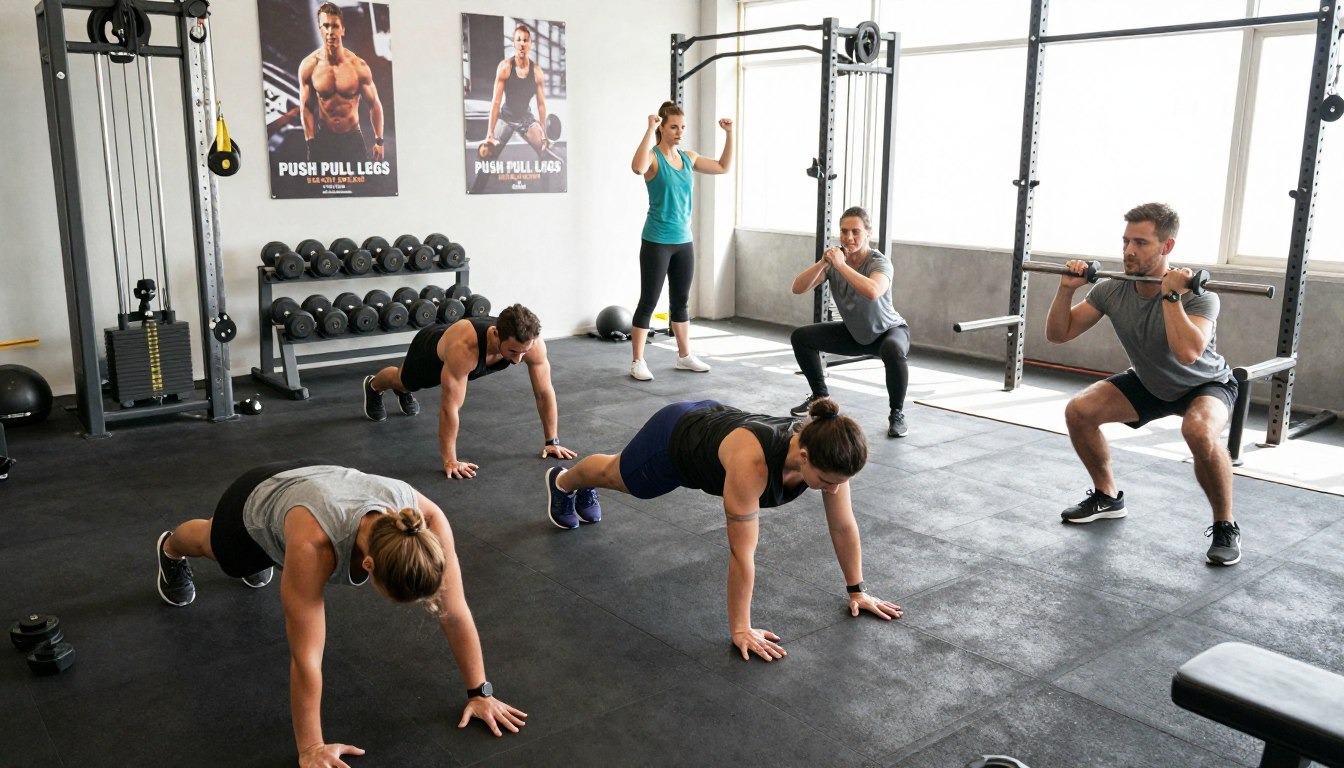
The PPL workout split focuses on muscle growth and strength. It divides workouts into three main areas: push, pull, and legs. This way, all major muscle groups get the right amount of attention.
Definition and Basic Principles
The Push Pull Legs routine is a weight training plan. It splits workouts into three days, each focusing on different exercises. The push day works on muscles for pushing, like the chest, shoulders, and triceps.
The pull day targets muscles for pulling, such as the back and biceps. The legs day focuses on the lower body, including the quadriceps, hamstrings, glutes, and calves.
This setup helps with focused training and better recovery. It prevents overtraining by giving muscles time to rest while others are being worked.
Science Behind Muscle Group Separation
The PPL routine is based on giving muscles enough time to recover. By dividing workouts into push, pull, and legs, it ensures that related muscles aren’t worked together. This helps in better recovery and muscle growth.
| Day | Muscle Groups Targeted | Example Exercises |
| Push Day | Chest, Shoulders, Triceps | Bench Press, Shoulder Press, Tricep Pushdowns |
| Pull Day | Back, Biceps | Pull-ups, Rows, Bicep Curls |
| Legs Day | Quadriceps, Hamstrings, Glutes, Calves | Squats, Lunges, Deadlifts, Calf Raises |
Understanding the Push Pull Legs routine helps in creating a workout plan that meets your needs. It’s a great way to reach your fitness goals.
push pull legs workout plan
Benefits of the Push Pull Legs Split
The PPL routine is known for boosting muscle recovery and making workouts more efficient. It divides the workout into three days: push, pull, and legs. This way, we target specific muscles without overdoing it.
Muscle Recovery Optimization
One key advantage of the PPL split is better muscle recovery. It lets each major muscle group rest enough. This prevents overtraining and ensures muscles are ready for the next intense session. It’s crucial for muscle growth and repair.
Training Frequency Advantages
The PPL routine also offers great training frequency benefits. With a good PPL workout guide, we can train each group every 5-7 days. This is perfect for most people. It supports progressive overload and steady muscle growth.
Workout Efficiency and Time Management
Another big plus of the PPL split is how it boosts workout efficiency and time management. Focusing on specific groups each day makes our routines more efficient. It saves time and helps avoid plateaus. For instance, a typical PPL routine might include:
| Day | Muscle Groups | Example Exercises |
| Push Day | Chest, Shoulders, Triceps | Bench Press, Shoulder Press, Tricep Pushdowns |
| Pull Day | Back, Biceps | Pull-ups, Rows, Bicep Curls |
| Legs Day | Legs | Squats, Deadlifts, Lunges |
By adding push pull legs exercises to our routine, we get a balanced workout. It efficiently covers all major muscle groups.
push pull legs exercises
How to Structure Your Push Pull Legs Workout Routine (Complete Guide)
To get the most out of the Push Pull Legs split, you need to plan your workouts well. A good plan makes sure you hit the right muscles at the right time. This helps your body recover and grow better.
3-Day vs. 6-Day Split Options
Choosing between a 3-day or 6-day PPL split is your first big decision. It depends on your fitness level, goals, and how busy you are.
Beginner-Friendly 3-Day Schedule
Beginners should start with a 3-day split. It balances your workouts, covering all major muscle groups. For example, you could do Push on Monday, Pull on Wednesday, and Legs on Friday. This gives your body enough time to recover.
Advanced 6-Day Programming
Advanced lifters might prefer a 6-day split. It lets you work out more often, which can help you get stronger faster. You could do two Push, Pull, and Legs days in a week. For example, Push on Monday, Pull on Tuesday, and so on.
Weekly Schedule Examples
Here are some ways to organize your PPL workout routine for the week:
- Monday: Push Day (Chest, Shoulders, Triceps)
- Tuesday: Pull Day (Back, Biceps)
- Wednesday: Legs Day (Quads, Hamstrings, Calves)
- Thursday: Push Day
- Friday: Pull Day
- Saturday: Legs Day
Fitness expert Jim Stoppani says, “A good workout plan is one that fits your needs and goals.”
“Consistency and patience are key when it comes to seeing results from your workout routine.”
By planning your PPL workout routine well, you can keep making progress towards your fitness goals.
The Push Day Breakdown
The push day is key in our workout routine for upper body strength. It focuses on pushing movements. These target the chest, shoulders, and triceps.
Primary Muscle Groups Targeted
The main muscles on push day are the chest, shoulders, and triceps. These muscles help with pushing and extending the arm.
Essential Push Exercises
Push exercises are divided into compound and isolation types. Both are crucial for a balanced workout.
Compound Movements
Compound movements work many joints and muscles at once. The bench press and push-ups are great for strengthening the chest and shoulders.
Isolation Exercises
Isolation exercises focus on specific muscles. For push day, tricep extensions and lateral raises are used. They help define the triceps and shoulders.
Sample Push Workout Routine
A sample push workout routine includes:
| Exercise | Sets | Reps |
| Bench Press | 4 | 8-12 |
| Push-ups | 3 | 12-15 |
| Tricep Extensions | 3 | 12-15 |
| Lateral Raises | 3 | 12-15 |
This routine balances compound and isolation exercises. It effectively targets the chest, shoulders, and triceps.
The Pull Day Breakdown
When we get to the pull day in our PPL routine, it’s key to know which muscles we’re working on. The pull day is a big part of the Push Pull Legs workout. It focuses on exercises that make the back, shoulders, and arms stronger.
Primary Muscle Groups Targeted
The main muscles we target on pull day are the latissimus dorsi, trapezius, rhomboids, and biceps brachii. These muscles help us pull, row, and lift. They are vital for a strong and stable upper body.
Essential Pull Exercises
To train these muscles well, we mix compound and isolation exercises in our routine.
Compound Movements
Compound movements like pull-ups, rows, and lat pulldowns work many muscles at once. They are great for building strength and muscle.
Isolation Exercises
Isolation exercises, such as bicep curls and tricep extensions, focus on specific muscles. They help us achieve a balanced and attractive physique.
Sample Pull Workout Routine
A sample pull workout routine might include:
- Pull-ups: 3 sets of 8-12 reps
- Barbell rows: 3 sets of 8-12 reps
- Lat pulldowns: 3 sets of 12-15 reps
- Bicep curls: 3 sets of 12-15 reps
This routine combines compound and isolation exercises. It effectively targets the muscles of pull day.
The Legs Day Breakdown
As we move through the PPL routine, legs day becomes key. It focuses on making the lower body stronger.
Leg day is vital for the strength and stability of the lower body. It works on many muscles at once, making sure you get a balanced workout.
Primary Muscle Groups Targeted
The main muscles on legs day are the quadriceps, hamstrings, glutes, and calves. These muscles help with movement, strength, and sports performance.
Training these muscles well means doing both compound and isolation exercises. This ensures you work all parts of the muscles.
Essential Leg Exercises
Leg exercises fall into two types: compound and isolation.
Compound Movements
Compound exercises like squats, deadlifts, and lunges work many muscles at once. They’re great for building strength and muscle.
Isolation Exercises
Isolation exercises, such as leg extensions and curls, focus on specific muscles. They help in developing muscles and fixing imbalances.
Sample Legs Workout Routine
A sample legs workout routine might include:
- Squats: 3 sets of 8-12 reps
- Leg Press: 3 sets of 10-15 reps
- Lunges: 3 sets of 8-12 reps per leg
- Leg Extensions: 3 sets of 12-15 reps
- Leg Curls: 3 sets of 10-12 reps
It’s important to adjust the routine to fit your fitness level and goals for the best results.
Progressive Overload: How to Advance Your PPL Routine
To improve your PPL workout, you need a plan for progressive overload. This means slowly increasing the challenge for your muscles over time. It’s key for growing stronger and building more muscle.
Weight Progression Strategies
Weight progression is a main way to increase the challenge. This means lifting heavier weights as your muscles get stronger. Keeping a workout log helps track your progress and know when to lift more.
When planning your weight increases, start with small amounts. Aim to add 2.5 to 5lbs every two weeks. This depends on how well you’re doing and how you feel.
Volume and Intensity Adjustments
Changing the volume and intensity of your workouts also helps. You can do more sets and reps or lift with less rest. This new challenge pushes your muscles in different ways.
For instance, you could add an extra set to your routine. Or, try lifting with only 45 seconds of rest between sets instead of 60 seconds.
Common Mistakes to Avoid in PPL Training
When you start a Push Pull Legs (PPL) workout, knowing the common mistakes is key. A good PPL routine can really help you get fit. But, making the wrong moves can slow you down.
Training Frequency Errors
One big mistake is getting the training frequency wrong. Working out a muscle too much can cause overtraining. On the other hand, not enough can mean you’re not training it enough. Finding the right balance is key to grow muscles and recover well.
Exercise Selection Issues
Choosing the right exercises is also very important. Picking exercises that don’t target the right muscles can make your workouts less effective. It’s essential to select a mix of compound exercises that work on multiple muscles at once.
| Exercise | Primary Muscle Group | Secondary Muscle Group |
| Bench Press | Chest | Triceps, Shoulders |
| Pull-ups | Back | Biceps |
| Squats | Legs | Glutes, Lower Back |
Recovery Misconceptions
Recovery is a big part of PPL training. Many think more training is always better. But, not enough recovery time can cause overtraining and lower performance. Getting enough rest and eating right is crucial for muscle recovery and growth.
By avoiding these common mistakes, you can make your PPL routine better. Pay attention to how often you train, the exercises you choose, and how you recover. This will help you reach your fitness goals faster.
Customizing PPL for Different Fitness Levels
Customizing your PPL routine is crucial, no matter your fitness level. The PPL workout is flexible, allowing adjustments for your goals and abilities.
Understanding your fitness level is key before making changes. This ensures the right modifications for your needs.
Beginner Modifications
Beginners should start with lighter weights. Focus on proper form and technique. Reducing workout volume to 2-3 sets per exercise helps avoid burnout and injury.
- Start with bodyweight exercises or light dumbbells.
- Reduce the frequency of workouts to 3-4 times a week.
- Focus on proper form and technique.
Intermediate Adjustments
Intermediate lifters can increase the intensity of their workouts. Add more weight, reps, or sets. Introduce varied exercises to target muscles from different angles.
- Increase the weight or resistance used in exercises.
- Add more exercises to target specific muscle groups.
- Consider adding a fourth day to your PPL split if recovery allows.
Advanced Variations
Advanced trainees can use high-intensity training techniques. Try supersets, drop sets, and rest-pause sets. Increase the weight used and focus on weak points for significant gains.
- Implement advanced training techniques like supersets and drop sets.
- Focus on specific weak points in your physique.
- Periodically change your routine to avoid plateaus.
By tailoring the PPL routine to your fitness level, you can ensure continuous progress. Whether you’re a beginner or an experienced lifter, the PPL routine can be adapted to meet your needs and help you achieve your fitness goals.
Nutrition and Recovery for PPL Success
To succeed with the Push Pull Legs (PPL) workout, you need more than just a good exercise plan. Nutrition and recovery are key. They help you grow stronger and recover faster.
Caloric and Protein Requirements
For muscle growth and recovery, you need enough calories and protein. Your daily calorie intake should match your energy needs, including workouts. Aim for a caloric surplus to fuel muscle repair and growth.
Protein is vital for muscle repair. Aim for at least 1 gram of protein per pound of body weight daily. For example, if you weigh 180 pounds, eat at least 180 grams of protein. This supports muscle recovery and growth.
| Body Weight (lbs) | Minimum Daily Protein Intake (grams) |
| 150 | 150 |
| 180 | 180 |
| 200 | 200 |
Meal Timing Around Workouts
Meal timing is crucial for your PPL workout. Eat a balanced meal with protein and carbs 1-3 hours before your workout. This gives you energy and supports muscle function.
After your workout, refuel with protein and carbs within 30-60 minutes. This helps restore energy and aid in muscle recovery.
Rest and Sleep Optimization
Rest and sleep are essential for recovery. Aim for 7-9 hours of sleep per night for optimal recovery.
Also, make sure to give your muscles time to recover between workouts. This might mean taking rest days or adjusting your workout schedule for recovery.
By focusing on nutrition and recovery, you can get the most out of your PPL workout. This will help you reach your fitness goals faster.
Conclusion
Adding a well-structured Push Pull Legs workout routine to your fitness plan can make a big difference. It helps with muscle recovery, lets you train more often, and boosts your overall fitness.
A PPL routine can be adjusted to fit your fitness level and goals. It works for both beginners and advanced athletes. This way, you can keep getting stronger and improving over time.
To really succeed in fitness, you need a good PPL routine, the right food, and enough rest. This combo helps you get the most out of your workouts and reach your fitness goals.
By using the tips from this push pull legs workout routine (complete guide), you’ll create a great ppl workout routine. It will help you see results and support your fitness dreams for the long haul.
FAQ
What is the Push Pull Legs (PPL) workout routine?
The PPL workout routine divides muscles into three groups: push, pull, and legs. This allows for focused training and better recovery.
How often should I train with the PPL routine?
You can train with PPL as often as 3 to 6 times a week. It depends on your fitness level and goals.
What are the benefits of the PPL workout routine?
PPL optimizes muscle recovery and allows for better training frequencies. It also makes workouts more efficient and easier to manage.
Can I customize the PPL routine for my fitness level?
Yes, you can adjust the PPL routine for beginners, intermediates, and advanced trainees. It fits different fitness levels.
What are the primary muscle groups targeted on push day?
On push day, you focus on the chest, shoulders, and triceps.
How do I progress my PPL workout routine?
To progress, focus on increasing weights and adjusting volume and intensity.
What are common mistakes to avoid in PPL training?
Avoid common mistakes like wrong training frequencies, bad exercise choices, and not understanding recovery.
How does nutrition impact PPL success?
Nutrition is key for PPL success. Pay attention to calories, protein, meal timing, and rest and sleep.
Can I follow a PPL workout plan for weight loss?
Yes, you can adapt PPL for weight loss. Just adjust your nutrition and add cardio.
What is progressive overload, and how does it apply to PPL?
Progressive overload means gradually increasing weight to challenge muscles and stimulate growth. It’s essential for improving your PPL routine.