The High Cost of Growth
Let’s cut through the Instagram filter for a second. The world of “fitness nutrition” is a minefield of overpriced hype. You’re bombarded with images of perfect physiques clutching shaker bottles next to mountains of grilled salmon, avocado toast, and exotic supplements that cost more per ounce than your gym membership. The subliminal message is clear: building a strong, muscular body is a luxury sport, reserved for those with premium grocery budgets and a personal chef.Budget
It’s a lie. A dangerous, demotivating lie.
The truth is, some of the most impressive physiques have been built in college dorm rooms, in modest home kitchens, and by people counting every penny. Muscle growth is a biological process, not a financial one. It requires consistent energy (calories), specific building blocks (protein), and strategic timing. None of these things need to be expensive.Budget
If you’ve ever looked at your grocery bill and felt your dreams of getting bigger shrink along with your wallet, this guide is for you. We’re going to dismantle the myth of the costly “bodybuilding diet” and replace it with a practical, powerful, and profoundly affordable blueprint. This isn’t about surviving on rice and tuna (though they have their place). It’s about making smart, informed choices that maximize nutritional bang for your buck, turning your kitchen into the most anabolic environment in town—no trust fund required.Budget
Part 1: The Pillars of Affordable Muscle
Before we hit the grocery store, we need to solidify the non-negotiable principles. Muscle growth, at its core, is simple. You must:Budget
- Consume a Calorie Surplus: Eat more energy than you burn.
- Hit Your Protein Target: Provide enough amino acids (protein’s building blocks) for repair and growth.
- Be Consistent: Do #1 and #2, day in and day out, for months.
The expensive diet fails at none of these. The budget diet masters all three. The difference is in the source, not the substance.Budget
The Golden Metric: Cost Per Gram of Protein
This is your new best friend. When evaluating any food, especially a protein source, do the quick mental math. A $8 package of fancy organic chicken breasts weighing 1 lb (454g) with 100g of protein gives you a cost of ~8 cents per gram of protein. A $4 container of cottage cheese with 80g of protein gives you 5 cents per gram. A $5 dozen eggs with 72g of protein gives you a stellar ~7 cents per gram.
Your mission is to find the lowest cost-per-gram staples and build your world around them.Budget
Debunking the “You Need 6 Meals a Day” Myth
This old-school bodybuilding trope is a budget-killer and a schedule-nightmare. It pushes people toward expensive, pre-packaged meals and constant snacking. Modern research, including studies cited by luminaries like Dr. Brad Schoenfeld, shows that total daily protein and calorie intake is what matters most, not meal frequency. You can build just as much muscle eating 3 or 4 solid meals as you can with 6. This simplifies cooking, reduces food waste, and saves you money.
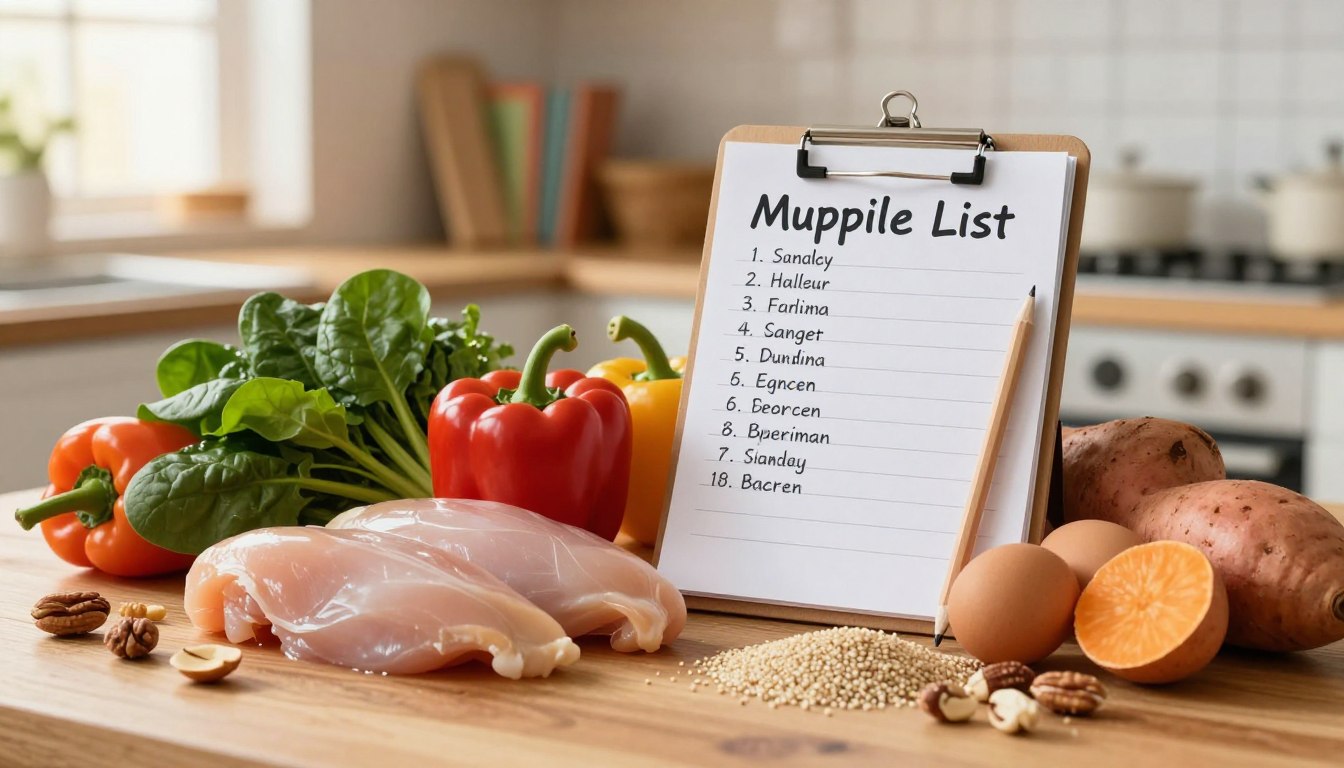
Part 2: The Budget Builder’s Grocery List
Forget the peripheral aisles. We’re heading straight for the nutritional powerhouses. Here is your categorized shopping list, ordered by value.
Category 1: Protein – The Building Blocks (Budget Kings & Queens)
- Eggs: Nature’s multivitamin. Incredibly bioavailable protein, healthy fats, and cheap. Buy them by the 60-case if you have space. Don’t fear the yolk—it’s packed with nutrients. Pro-tip: Hard-boil a dozen at the start of the week for the ultimate grab-and-go snack.
- Chicken Legs & Thighs (Bone-in, Skin-on): While everyone fights over expensive breasts, the dark meat sits patiently, cheaper and often more flavorful. It’s slightly higher in fat, which is great for your calorie surplus and satiety. Learn to debone them yourself—it’s a 30-second skill that saves dollars.
- Whole Milk & Cottage Cheese: Dairy is a secret weapon. A gallon of whole milk provides high-quality protein, carbs, fats, and micronutrients like calcium for around $3-$4. Cottage cheese is a slow-digesting casein protein powerhouse. Mix it with some fruit or a dash of pepper.
- Canned Tuna & Sardines: The shelf-stable saviors. Dirt cheap, pure protein. Opt for tuna packed in water. Sardines are a bonus for their omega-3s and calcium (from the bones). Budget Hack: Canned chicken or turkey can be a great, cheap alternative for salads and wraps.
- Legumes: Lentils & Beans: The plant-based champions. Dried beans and lentils are arguably the cheapest protein source on earth. A 1-lb bag of lentils costs pennies and can make 10+ servings. They’re also packed with fiber and complex carbs. Key Note: While not a “complete” protein on their own, combining them with a grain like rice within the same day provides all essential amino acids.
Category 2: Carbohydrates – The Energy Fuel (Bulk is King)
Carbs are your training fuel and help spare protein for muscle building. We want dense, cheap, slow-burning energy.
- Rice (White or Brown): The ultimate bulk carb. A 20-lb bag is a multi-month investment. White rice is cheaper, easier to digest, and perfect post-workout. Brown rice offers more fiber. Cook a big batch twice a week.
- Oats (Rolled or Old-Fashioned): The breakfast of champions for a reason. Insanely cheap, high in fiber, and incredibly versatile. Don’t buy instant packs—get a giant cylinder of plain oats.
- Potatoes & Sweet Potatoes: Nutrient-dense, filling, and incredibly cheap per pound. Bake a few sweet potatoes as a side for any meal. Regular white potatoes, often maligned, are rich in potassium and vitamin C.
- Pasta: Whole wheat or regular, pasta is a cheap, easy source of calories and carbs for your training days. Pair it with a homemade tomato sauce and lean ground turkey for a muscle-building feast.
- Frozen Vegetables: Often cheaper and more nutritious than fresh (they’re frozen at peak ripeness). Broccoli, spinach, mixed veggie bags—they add volume, micronutrients, and fiber to your meals for virtually no cost.
Category 3: Fats – The Hormone Helpers (Concentrated Value)
Fats are calorie-dense, so a little goes a long way for hitting your surplus and supporting hormone production.
- Cooking Oils: A large bottle of olive oil or canola oil is a long-term investment for cooking and dressing.
- Peanut Butter (Natural): The king of calorie-dense, budget-friendly fats (with a protein bonus). A spoonful in your oats, on rice cakes, or blended into a shake can add hundreds of quality calories.
- Seeds (Flax, Chia): Buy in bulk online. A tablespoon of flax or chia seeds added to yogurt or a shake provides healthy omega-3 fats and fiber for pennies.
The “Skip It” List:
- Pre-Cut/Packaged Anything: You’re paying 300% more for convenience. Buy whole.
- “Fitness” Branded Foods: Protein bars, expensive granola, “clean” snack packs. These are marketing products, not nutritional necessities.
- Exotic Superfoods: Acai, goji berries, expensive powders. Your money is better spent on an extra pound of chicken or a bag of spinach.
- Most Drinkable Calories: Soda, fancy coffees, juice. These provide sugar with little satiety or nutrition. Drink water, milk, and coffee you make yourself.
Part 3: Building Your Weekly Plan – A Sample Blueprint
Let’s translate this list into a real-world, weekly plan for a 180lb individual aiming to build muscle. We’ll aim for ~3,200 calories and 180g of protein.
Weekly Cooking Strategy (Batch Cook Sunday & Wednesday):
- Cook 4-5 cups of dry rice. Store in the fridge.
- Grill or bake 4-5 lbs of chicken thighs. Shred or chop.
- Hard-boil 12 eggs.
- Wash and chop a head of broccoli or bag of potatoes.
Sample Daily Meal Plan (Approx. $8-12/day total):
- Meal 1 (Breakfast): The Power Bowl
- 1 cup dry oats (cooked with water) – 300 cals, 10g P
- 2 whole eggs + 3 egg whites scrambled into the oats – 150 cals, 25g P
- 1 tbsp peanut butter stirred in – 100 cals, 4g P
- Total: ~550 cals, 39g protein. Cost: ~$1.50
- Meal 2 (Lunch): The Big Batch Lunch
- 6 oz cooked chicken thighs – 280 cals, 35g P
- 1.5 cups cooked white rice – 300 cals, 6g P
- 1 cup frozen broccoli, steamed – 30 cals
- Soy sauce/hot sauce for flavor.
- Total: ~610 cals, 41g protein. Cost: ~$2.75
- Meal 3 (Post-Workout): The Simple Shake (Only if needed for convenience)
- 2 cups whole milk – 300 cals, 16g P
- 1 scoop affordable whey or casein protein powder – 120 cals, 24g P
- Total: 420 cals, 40g protein. Cost: ~$2.50 Note: The shake is optional. You could eat a meal instead.
- Meal 4 (Dinner): The Flexible Feast
- 1 can of tuna (mixed with light mayo/yogurt) – 120 cals, 27g P
- Large baked potato with a pat of butter – 250 cals, 5g P
- Large side salad with cheap greens, cucumber, oil & vinegar – 100 cals
- Or Alternate: 1 cup of lentil soup (homemade from dried lentils, carrots, onion, stock) with 2 slices of whole-wheat toast.
- Total: ~470-600 cals, 30-40g protein. Cost: ~$2.50
- Snack/Calorie Top-Up:
- 1 cup cottage cheese with a handful of frozen berries – 200 cals, 25g P
- A glass of whole milk with your final meal.
- Total: ~200-300 cals, 25-30g protein. Cost: ~$1.00
Daily Tally: ~2,300 – 2,800 calories | 170-190g protein. Total Food Cost: ~$8-10.
To hit higher calories, simply increase portions: more rice, more potato, an extra spoon of peanut butter, an extra glass of milk. These incremental adds are where the budget surplus happens easily.
Part 4: Master-Level Budget Hacks & Psychology
1. The Spice Rack is Your Savior.
Boredom is the killer of budget diets. A well-stocked spice rack (cumin, paprika, garlic powder, onion powder, chili flakes, Italian seasoning) can make chicken, rice, and lentils taste completely different every day. Invest in hot sauce, soy sauce, and mustard.
2. Shop Sales, Buy in Bulk, and Freeze.
Meat is the biggest expense. When chicken, ground turkey, or cheap cuts of beef/pork are on sale, buy as much as your freezer can hold. Portion it out before freezing. Join a wholesale club (Costco, Sam’s) for eggs, oats, rice, and frozen veggies if possible.
3. Water is Your Drink.
Period. It’s free, essential, and saves you hundreds of dollars and thousands of useless sugar calories a year.
4. Supplements? Only the Essential One.
The only supplement that is truly cost-effective and useful for a budget muscle-building diet is a basic Whey Protein Powder. It’s not magic; it’s just convenient, cheap protein (calculate your cost-per-gram!). Use it to top up your protein if you’re short, or for a quick post-workout hit if you can’t eat a meal. Forget pre-workouts, BCAAs, and fat burners. That money is better spent on real food.
5. Embrace Imperfect Produce.
Many stores sell “ugly” fruits and vegetables at a deep discount. They taste exactly the same. This is a goldmine for bananas, apples, peppers, and more.
6. Leftovers are Your Friend.
Cook once, eat twice (or thrice). That giant pot of chili, stew, or curry is tomorrow’s lunch and the next day’s easy dinner.
Conclusion: Building Wealth in Health
The journey to building muscle on a budget is more than a nutrition plan; it’s a lesson in resourcefulness, discipline, and rejecting consumerist hype. It proves that the foundations of a powerful physique are not found in a boutique supplement store, but in the humble, timeless staples of the human diet: eggs, milk, grains, and legumes.
When you fuel your body with these affordable, nutrient-dense foods, you’re doing more than saving money. You’re building a deeper understanding of how your body works, free from the noise of marketing. You’re cultivating the discipline of preparation over convenience. The confidence you gain isn’t just from your growing muscles, but from the knowledge that you are capable, self-sufficient, and in control.
So, take this blueprint. Adapt it. Make it yours. Let your grocery list be a statement of intent, a declaration that your goals are not for sale to the highest bidder, but are built daily, with your own hands, from the ground up. The most valuable physique is not the one that costs the most, but the one that teaches you the most along the way.
Now, go build.
Focus Keywords: Affordable Gym Diet, Budget Muscle Building, Cheap Bulking Diet
SEO & Article Keywords: bodybuilding on a budget, cheap high protein foods, meal prep for muscle gain, inexpensive bulking, cost per gram of protein, building muscle without supplements, grocery list for gainz, cheap calorie sources, budget fitness nutrition, whole foods for muscle, eating big for less, poor man’s bulking diet, homemade mass gainer, economical gym diet, affordable protein sources.