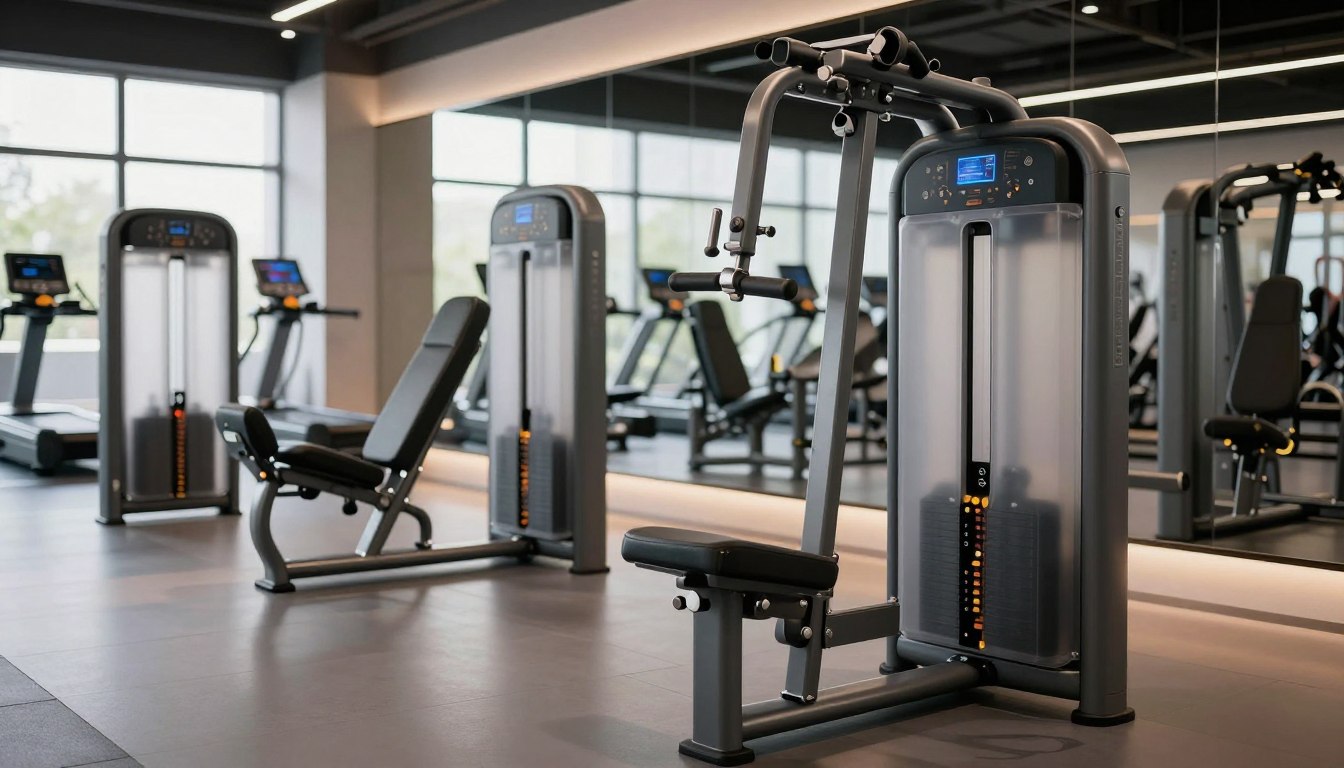
Beyond Bro-Science: Building with Biology, Not Guesswork
Walk into any gym and you’ll hear it. The well-intentioned but often contradictory advice: “You gotta feel the burn!” “Go heavy or go home!” “Pump for the gods, brother!” This is the realm of bro-science—a mix of anecdote, tradition, and machismo that has built plenty of physiques, but often through sheer effort and genetic luck rather than efficiency. For every person who succeeds, countless others spin their wheels in confusion, wondering why their brutal effort isn’t translating to proportional results.Science
What if you could cut through the noise? What if, instead of following the loudest voice in the room, you could follow the data? The last two decades have seen an explosion in sports science research, transforming muscle hypertrophy (growth) from an art into a measurable science. We now have a remarkably clear picture of the primary drivers of muscle growth and how to optimize them.
This article is your evidence-based blueprint. We’re moving past the myths and into the peer-reviewed journals. We’ll explore the three non-negotiable mechanical and metabolic stimuli for hypertrophy, break down the optimal training variables (volume, intensity, frequency), and integrate this into a practical, sustainable system. This isn’t about the hardest workout; it’s about the smartest stimulus. Let’s build with biology as our foreman.
Part 1: The Three Pillars of Hypertrophy – The “Why” Behind Growth
Muscle growth isn’t a singular event; it’s a cascade of biological processes triggered by specific, deliberate stimuli. Modern science points to three primary, interconnected mechanisms.Science
Pillar 1: Mechanical Tension – The Primary Driver
The Concept: This is the foundation. Mechanical tension is the force generated within a muscle fiber when it contracts against resistance. Think of it as the direct, physical “stretch” and “pull” on the muscle’s structure.
The Science: When a muscle is placed under high levels of tension—particularly under load in a stretched position—it activates cellular signaling pathways (like the mTOR pathway) that essentially tell the cell, “We need to get bigger to handle this.” This isn’t just about moving weight; it’s about creating maximal internal force. Research, such as that synthesized by Dr. Brad Schoenfeld, a leading researcher in the field, consistently identifies mechanical tension as the most critical stimulus for long-term muscle growth.
The Practical Takeaway: To maximize tension, you need to use challenging weights and train through a full range of motion. Lifting a heavy weight for a partial rep creates less tension on the muscle than lifting a moderately heavy weight through its full, stretched-to-contracted journey.
Pillar 2: Metabolic Stress – The “Burn” with a Purpose
The Concept: You know that burning sensation, the “pump” that makes your muscles feel full and tight? That’s metabolic stress. It occurs when you perform repeated contractions that restrict blood flow (occlusion) to the muscle, creating a buildup of metabolites like lactate, hydrogen ions, and creatine.
The Science: This metabolic soup isn’t just discomfort; it’s a potent anabolic signal. It triggers hormone release (like growth hormone), causes cell swelling (which may stimulate growth), and likely contributes to the recruitment of more muscle fibers. Studies on “blood flow restriction” (BFR) training show that even very light weights can stimulate growth when metabolic stress is extreme, proving its independent role.
The Practical Takeaway: Metabolic stress is best achieved with moderate weights for higher repetitions (e.g., 10-20 reps per set), shorter rest periods (45-90 seconds), and techniques like drop sets or supersets. It’s the domain of the mind-muscle connection and the chase for a deep, lingering burn.
Pillar 3: Muscle Damage – The Controlled Micro-Tear
The Concept: This is what causes Delayed Onset Muscle Soreness (DOMS). It refers to the microscopic damage to muscle fibers and their surrounding structures (like the Z-discs) caused by unaccustomed or strenuous exercise, especially the eccentric (lowering) phase.
The Science: This damage initiates a local inflammatory response. Satellite cells (muscle stem cells) are activated to repair and remodel the damaged fibers, potentially fusing with them to add new nuclei and facilitate growth. It’s a “break down to build up” process.
A Crucial Nuance: While important, muscle damage is not the goal; it’s a byproduct of effective training that provides a growth stimulus. Chasing extreme soreness is counterproductive, as it hampers recovery and future performance. The goal is to create enough damage to signal repair, not so much that you can’t train effectively days later.
The Practical Takeaway: The eccentric (lowering) phase is key for inducing muscle damage. Controlling the descent of the weight for 2-4 seconds is far more effective than dropping it. Introducing novel exercises or overload also creates damage, but this effect diminishes as you adapt.
The Synergy: The magic happens when you combine these pillars. A set of squats with a heavy weight (high mechanical tension) taken close to failure for 8-12 reps (inducing metabolic stress) with a controlled 3-second descent (inducing muscle damage) is a potent, multi-angled attack for growth.
Part 2: Programming the Stimulus – The “How” Variables
Knowing the “why” is useless without the “how.” This is where we translate science into sets and reps.
Variable 1: Volume – The King of the Dose-Response Relationship
The Science: Volume, defined as sets x reps x weight, is the single most important programming variable for muscle growth. The relationship is generally dose-dependent: more volume leads to more growth, up to a point. A landmark 2017 meta-analysis by Schoenfeld et al. concluded that performing >10 sets per muscle group per week is associated with significantly greater hypertrophy than lower volumes. However, the “Maximum Recoverable Volume” (MRV) is individual—the point where more volume leads to fatigue without additional growth.
The Sweet Spot: For most trained individuals, 10-20 hard sets per muscle group per week is the effective range. Beginners start on the lower end (10-12), advanced lifters can tolerate the higher end.
Example: For your chest in a week, this could be: 4 sets of bench press on Monday, 3 sets of incline dumbbell press on Wednesday, and 3 sets of chest flies on Friday = 10 total hard sets.
Variable 2: Intensity – How Hard Are You Actually Trying?
The Science: In the context of hypertrophy, intensity doesn’t just mean the percentage of your 1-rep max; it refers to proximity to failure. A “hard set” is one taken within 0-3 Reps In Reserve (RIR). Research consistently shows that training within 1-3 RIR is sufficient for maximal growth stimulus, while training to absolute failure (0 RIR) every set adds excessive fatigue without extra benefit.
The Goldilocks Zone: For compound lifts (squats, presses), staying at 2-3 RIR preserves technique and CNS health. For isolation moves (curls, extensions), taking sets to 1-2 RIR is safe and effective.
Example: On your last set of dumbbell rows for 10 reps, you feel you could have done 2 more clean reps with perfect form. That’s a 2 RIR set—perfectly effective.
Variable 3: Frequency – How Often You Hit the Button
The Science: Given that muscle protein synthesis (MPS) is elevated for 24-36 hours post-training, distributing your weekly volume across more frequent sessions can theoretically provide more frequent growth spikes. A 2018 systematic review found a slight advantage for higher frequencies (>2x/week per muscle) compared to lower frequencies (1x/week).
The Practical Synthesis: Higher frequency works because it allows you to accumulate higher quality volume. It’s easier to do 5 hard, focused sets for your back twice a week (10 total) than to survive 10 brutal sets in one annihilating session where your last 4 sets are sloppy.
Optimal Strategy: Train each major muscle group 2-3 times per week. This is best achieved through full-body (3x/week) or upper/lower splits (4x/week).
Variable 4: Exercise Selection – The Tools for the Job
The Science: Compound, multi-joint exercises (squats, deadlifts, presses, rows, pull-ups) are superior for systemic hormone response and overall mass because they allow you to lift the most weight and stress the most muscle. However, isolation exercises (leg extensions, bicep curls, lateral raises) are critical for targeting specific muscles that may be under-stimulated by compounds, ensuring balanced development and maximizing metabolic stress in that muscle.
The 80/20 Rule: 80% of your program should be built on heavy compound lifts for foundational mass and strength. 20% can be dedicated to targeted isolation work to bring up lagging parts and chase metabolic stress.
Part 3: The Integrated System – A Sample Science-Based Week
Let’s put this all together into a practical, 4-day Upper/Lower split, ideal for an intermediate lifter.
Guiding Principles:
- Progressive Overload: Add weight, reps, or sets weekly.
- RIR Management: Use the prescribed RIR as a guide.
- Tempo: Control the eccentric (2-3 seconds) on most sets.
- Rest Intervals: 2-3 minutes for heavy compounds, 60-90 seconds for isolation/hypertrophy work.
Day 1: Lower Body (Focus: Quads, Glutes – Mechanical Tension)
- Barbell Back Squat: 3 sets of 5-7 reps @ 3 RIR (Heavy, tension-focused)
- Romanian Deadlift: 3 sets of 8-10 reps @ 2 RIR (Hinge pattern, damage-focused)
- Leg Press: 3 sets of 10-15 reps @ 1-2 RIR (Volume, metabolic stress)
- Leg Curl: 3 sets of 12-15 reps @ 1 RIR (Isolation, metabolic stress)
Day 2: Upper Body (Focus: Horizontal Push/Pull – Strength)
- Flat Barbell Bench Press: 3 sets of 5-7 reps @ 3 RIR
- Bent-Over Barbell Row: 3 sets of 6-8 reps @ 2 RIR
- Overhead Press: 3 sets of 8-10 reps @ 2 RIR
- Lat Pulldown: 3 sets of 8-12 reps @ 1-2 RIR
- Tricep Pushdown: 2 sets of 12-15 reps @ 1 RIR
Day 3: Rest or Active Recovery
Day 4: Lower Body (Focus: Hypertrophy & Accessories)
- Bulgarian Split Squats: 3 sets of 8-10 reps per leg @ 2 RIR (Unilateral, damage/stress)
- Hip Thrust: 3 sets of 10-15 reps @ 1-2 RIR (Glute focus, pump)
- Leg Extension: 3 sets of 15-20 reps @ 0-1 RIR (Metabolic stress for quads)
- Seated Calf Raise: 4 sets of 15-20 reps @ 1 RIR
Day 5: Upper Body (Focus: Vertical Pull & Metabolic Stress)
- Weighted Pull-Ups/Chin-Ups: 3 sets of 6-10 reps @ 2 RIR
- Incline Dumbbell Press: 3 sets of 10-12 reps @ 1-2 RIR
- Chest-Supported Row: 3 sets of 10-15 reps @ 1 RIR
- Dumbbell Lateral Raise: 3 sets of 12-20 reps @ 0-1 RIR (High stress)
- Dumbbell Bicep Curl: 3 sets of 10-15 reps @ 1 RIR
Days 6 & 7: Rest
Weekly Volume Check (Example: Chest): Bench Press (3 sets) + Incline Dumbbell Press (3 sets) = 6 hard sets. This could be increased to 10+ over time by adding a third exercise or sets.
Part 4: The Non-Negotiable Support System
The gym provides the stimulus. Growth happens outside it.
1. Nutrition: The Building Materials
You cannot build a brick wall without bricks. For muscle growth, you need:
- A Calorie Surplus: A slight excess of energy (200-500 calories above maintenance) to fuel repair and growth.
- High Protein Intake: The gold standard is 1.6-2.2 grams of protein per kilogram of body weight (0.7-1 gram per pound) daily, distributed across 3-4 meals. This maximizes MPS throughout the day.
- Smart Carb & Fat Intake: Carbs fuel your training and replenish glycogen. Fats support hormone production. Don’t neglect them.
2. Recovery: The Construction Site
- Sleep: This is your most potent anabolic. Aim for 7-9 hours per night. Growth hormone peaks during deep sleep, and cellular repair is paramount.
- Stress Management: Chronic psychological stress elevates cortisol, a catabolic (muscle-breaking) hormone that directly opposes growth. Manage stress through mindfulness, leisure, and not making every life event a crisis.
- Deloading: Every 4-8 weeks, reduce volume or intensity by 40-60% for one week. This clears accumulated fatigue, prevents overtraining, and allows for a “supercompensation” effect where you return stronger.
3. Consistency & Patience: The Timeline
Muscle growth is slow. Under perfect conditions, an untrained male might gain 1-2 pounds of muscle per month in his first year. For trained individuals or females, it’s slower. This is a game of millimeters, measured over months and years. The science provides the most efficient path, but it is not a shortcut.
Conclusion: The Art of Applied Science
Science-based training isn’t about turning you into a robot, blindly following numbers. It’s about empowering you with the principles that work, so you can train with intention and confidence. It’s the difference between throwing paint at a wall and painting a masterpiece with a deliberate brush.
The blueprint is now clear:
- Stimulate with mechanical tension, metabolic stress, and controlled damage.
- Dose that stimulus with optimal volume, intensity, and frequency.
- Support the process with precise nutrition and dedicated recovery.
- Repeat consistently for months and years.
Forget the loudest voice in the locker room. Listen to the data. By aligning your effort with the underlying biology of muscle growth, you’re not just working hard—you’re working right. You are now building with the blueprints in hand. The rest is a matter of disciplined, patient construction.
Focus Keywords: Science-Based Gym Training, Maximum Muscle Growth, Hypertrophy Science
SEO & Article Keywords: evidence-based bodybuilding, muscle growth mechanisms, mechanical tension, metabolic stress, muscle damage, training volume, reps in reserve, workout frequency, progressive overload, hypertrophy programming, protein for muscle growth, recovery for hypertrophy, peer-reviewed fitness, strength training science, optimal sets and reps.