We’ve all felt it: the satisfying clunk of a weight stack, the smooth glide of a premium cable pulley, the reassuring stability of a well-bolted bench. A great workout isn’t just about willpower and programming; it’s facilitated by the tools we use. Behind every dumbbell rack and cardio machine lies a world of engineering standards, ergonomic research, and safety protocols. This article dives into the often-overlooked realm of modern gym equipment standards and best practices, exploring how they create safer, more effective, and more accessible spaces for everyone from weekend warriors to elite athletes.Building Better
The Foundation: Why Standards Matter
Imagine if every car manufacturer had a different pedal arrangement or a unique steering response. Chaos—and danger—would ensue. The fitness industry, though less regulated than automotive, operates on a similar principle. Standards provide a common language of safety, durability, and usability.
The primary guardians of these standards are international bodies like ASTM International (specifically Committee F08 on Sports Equipment and Facilities) and ISO (the International Organization for Standardization). Their documents, with titles like ASTM F3105 for strength equipment or ISO 20957 for stationary training equipment, are the rulebooks. They don’t tell companies how to design a leg press, but they dictate:
- Safety Margins: How much weight must a bench hold beyond its stated maximum? (Often 2-4 times the user weight or rated load).
- Stability Requirements: How much tilt is allowable if a user mounts a barbell off-center on a squat rack?
- Pinch and Shear Points: Defining clearances to prevent fingers, clothing, or hair from getting caught.
- Durability Testing: Simulating years of use through repetitive motion robots to ensure frames don’t crack and cushions don’t disintegrate.
Adherence to these standards is often verified by independent third-party testing labs, whose certification marks are a silent badge of honor on quality equipment.
The Pillars of Modern Equipment Design
Modern best practices extend beyond mere compliance, focusing on user experience, inclusivity, and longevity.
1. Biomechanics and Ergonomics: The Human Fit
Gone are the days of one-size-fits-all, awkward movement paths. The best equipment today is designed around human biomechanics.
- Adjustability: Look for benches with multiple back angles, leg developer machines with pivot points, and cable columns with a vast array of attachment heights. The goal is to fit the equipment to the user, not the other way around.
- Movement Arc: Premium equipment guides the user through a natural, joint-friendly path. A poor leg extension machine might force your knees into an uncomfortable angle; a well-designed one rotates in harmony with your anatomy.
- Case in Point: The evolution of the lat pulldown. Early models had a fixed, straight bar path. Modern versions often feature a slight “J-Curve” or articulating arms that mimic the scapular movement of a perfect pull-up, reducing shoulder strain and improving muscle engagement.
2. Durability and Serviceability: Built to Last
Commercial gym equipment is an investment expected to withstand 16-20 hours of use daily, 365 days a year. Best practices here are brutal and practical.Building Better
- Materials: Aircraft-grade steel tubing, high-density polymer bushings (or sealed bearing pivots), and powder-coat finishes that resist corrosion from sweat and cleaning agents.Building Better
- User-Replaceable Parts: Consumable items like seat pads, grip handles, and weight stack selector pins should be easy to swap out without a full engineering overhaul. As Master Fitness Trainer and gym owner, John Casterline, notes: “The difference between a good brand and a great brand is often their parts department and service manuals. Can a local technician fix it in an hour, or does the whole machine need to be shipped back?”Building Better
- Modular Design: In functional training zones, rigs and frames that allow for easy reconfiguration keep the space dynamic and adaptable to new training trends.
3. Hygiene and Maintenance: The Non-Negotiables
The post-pandemic world hyper-focused on what we touch. Modern standards have responded.Building Better
- Antimicrobial Additives: Built into upholstery vinyl and high-touch plastic components to inhibit bacterial and fungal growth.
- Seamless Upholstery: Cushions are now often molded or welded without stitches, eliminating crevices where sweat and grime can fester.
- Clear Maintenance Logs: Best-in-class equipment comes with a manual dictating daily wipe-downs, weekly bolt checks, and monthly inspections of cables and pulleys. A 2022 survey by the International Health, Racquet & Sportsclub Association (IHRSA) found that facilities with formalized equipment maintenance schedules reported 62% fewer member complaints related to equipment malfunction.
4. Accessibility and Inclusivity: Gym for All
This is the frontier of modern design. The standard is shifting from accommodating the “average” user to designing for a vast spectrum of abilities.
- Color Contrast: Using high-contrast colors for weight pins, adjustment handles, and safety bars aids users with visual impairments.Building Better
- Clearance for Wheelchairs: Functional trainers and multi-stations designed with open space underneath to allow for close approach.
- Intuitive, Icon-Based Instructions: Reducing language barriers and making setup clear for novice users.Building Better
Implementing Best Practices: A Guide for Buyers and Managers
Whether you’re outfitting a commercial facility or a home gym, asking the right questions is key.Building Better
For Commercial Buyers:
- Demand the Certificates: Ask for proof of ASTM or ISO compliance.Building Better
- Test for “Feel,” Not Just Specs: Have trainers of different sizes and specializations use the demo unit. Does the chest press feel natural for a 5’2” user and a 6’4” user?
- Investigate the Supply Chain: What is the warranty? (7-10 years on frame is standard for commercial). How quickly can you get parts? A cheaper machine that’s down for six weeks costs more in member satisfaction than a reliable one.Building Better
For Home Gym Enthusiasts:
- Prioritize Adjustability: Your body is your only client. Equipment that can be finely tuned will deliver better results and last a lifetime.Building Better
- Check Weight Ratings: Don’t just go by the advertised “max weight.” Look for the build quality—thicker steel, solid welds, minimal wobble.
- Mind Your Flooring: A best practice often ignored at home is protecting your equipment and your floor. Invest in quality rubber flooring to dampen sound, protect your foundation from dropped weights, and provide a stable, slip-resistant surface.
The Future: Smart, Sustainable, and Connected
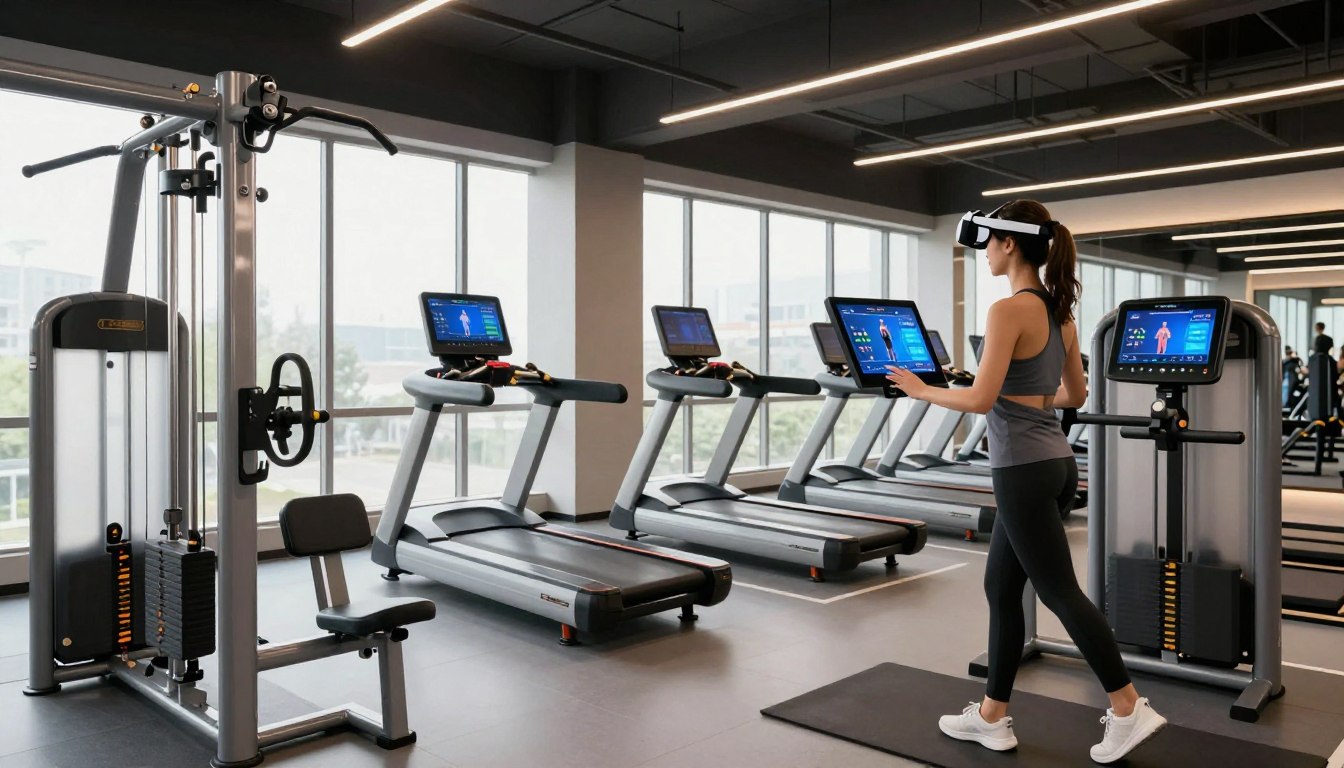
The next wave of standards is already forming. Connected fitness introduces needs for data accuracy standards (is the wattage on this bike display precise?). Sustainability is pushing manufacturers to use more recycled steel, recyclable upholstery, and design for end-of-life disassembly. Furthermore, as AI integrates into equipment, standards for data privacy and algorithmic transparency will become crucial.Building Better
Conclusion
Modern gym equipment is far more than welded metal and padded vinyl. It is the product of decades of research, rigorous testing, and a deepening understanding of human physiology and safety. By embracing established standards and evolving best practices—in biomechanics, durability, hygiene, and inclusivity—we create spaces that are not just rooms filled with machines, but true partners in health and performance. The true mark of excellence in any piece of equipment is when it feels like an extension of the body, allowing the mind to focus wholly on the effort, trust in the tool, and the pure experience of movement. That seamless, invisible support is the ultimate goal, and the real triumph, of modern design.Building Better