The Anticipation and the Anxiety
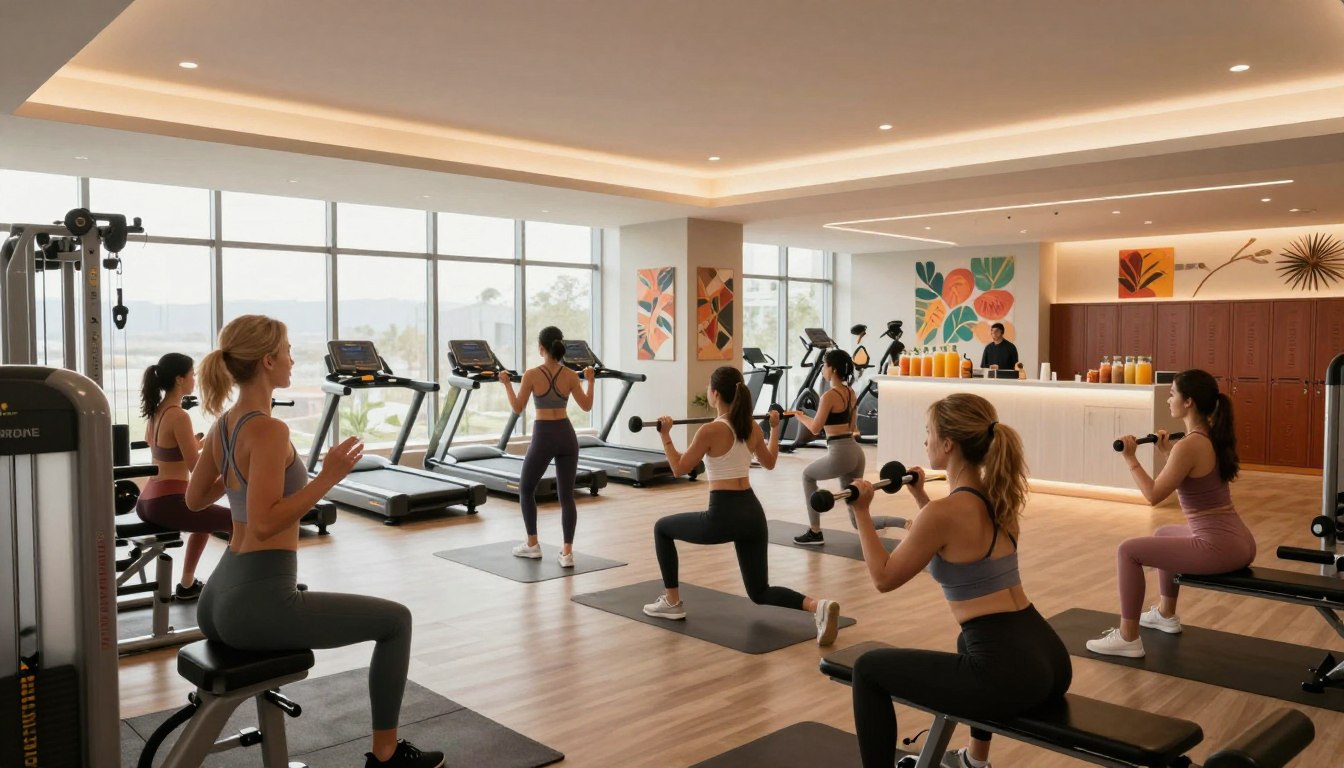
Let’s be honest. That first walk into a gym can feel like stepping onto a foreign planet. The air hums with a low-frequency clang. Strange, gleaming machines populate the landscape. A tribe of seemingly born-and-bred inhabitants move with a confident, sweat-soaked grace. And there you are, standing by the door, trying to remember how your limbs work.Starting Gym
If this is you, take a deep breath. You are at the beginning of one of the most profoundly positive journeys you can undertake. Not just for your body, but for your mind, your confidence, and your life. Starting gym training isn’t about instantly becoming a bodybuilder or an athlete; it’s about learning a new language—the language of self-improvement through physical stress and recovery.
This overwhelming feeling is universal. A 2023 survey by the International Health, Racquet & Sportsclub Association (IHRSA) found that 68% of new gym members cited “intimidation” and “uncertainty about what to do” as their primary barriers in the first month. You are not alone. This guide is your translator, your map, and your first coach. We’re going to break down the entire process, from the mental groundwork to the final rep of your first year, into a logical, step-by-step progression. No fluff, no impossible promises—just clear, actionable guidance to help you build a foundation that lasts.
Part 1: The Pre-Workout – Laying the Foundation (Weeks -1 to 0)
Before you ever touch a weight, the most important work happens between your ears and in your planning.And there you are, standing by the door, trying to remember how your limbs work.Starting Gym
Step 1: Define Your “Why” – The North Star
“Getting in shape” is a vague destination that’s easy to abandon. You need coordinates.
- Weak “Why”: “I want to look better.”
- Strong “Why”: “I want to feel strong enough to play with my kids without getting winded.” “I want to build the discipline to see a six-month project through.” “I want to manage my stress and anxiety through physical exertion, not scrolling.”
Your “Why” is your anchor. Write it down. Revisit it when motivation wanes.
Step 2: The Medical Check-In – Safety First
This is non-negotiable, especially if you’re over 30, have been sedentary, or have any pre-existing conditions (heart issues, hypertension, joint problems, diabetes). A quick check-up with your doctor isn’t a sign of weakness; it’s the sign of a smart athlete. Tell them you’re starting a strength and conditioning program. Get the all-clear. It’s the best insurance policy you can buy.And there you are, standing by the door, trying to remember how your limbs work.Starting Gym
Step 3: Choose Your Arena – Picking a Gym
Don’t just choose the closest or cheapest. Your gym should fit your personality and goals.
- Big-Box Commercial Gyms (Planet Fitness, LA Fitness, 24 Hour Fitness):
- Pros: Open long hours, lots of equipment, often have pools/classes, affordable.
- Cons: Can be crowded, impersonal, may lack a “serious training” atmosphere.
- Best for: Beginners who want flexibility and variety on a budget.
- Strength & Conditioning Gyms / “Box” Gyms:
- Pros: Coach-led, community-focused, emphasis on functional training (barbells, kettlebells), incredible for accountability.
- Cons: More expensive, often class-schedule dependent, can be intense.
- Best for: Those who thrive on group energy and want direct coaching.
- Boutique Studios (Orangetheory, F45, Barry’s):
- Pros: High-energy, structured workouts, no thinking required.
- Cons: Very expensive long-term, less focus on pure strength building, can be repetitive.
- Best for: People who need a pre-packaged, intense cardio-and-strength blend and dislike planning.And there you are, standing by the door, trying to remember how your limbs work.Starting Gym
The Recon Mission: Get a day pass. Go at the time you’d normally train. Is it packed? Is the equipment well-maintained? Do the members and staff seem friendly? Trust your gut.
Part 2: Gear & Mindset – The Launchpad
Step 4: The Minimalist Gear List
You don’t need $500 in neon gear. Start with:
- Shoes: Avoid running shoes with big, squishy heels for lifting. They’re unstable. Opt for flat-soled shoes (Converse Chuck Taylors, Vans) or invest in a pair of cross-trainers (Nike Metcon, Reebok Nano). For now, any comfortable, stable shoe will do.
- Clothing: Moisture-wicking fabric (not cotton) that allows full movement. A t-shirt and shorts or athletic pants are perfect.
- Water Bottle: Stay hydrated. A simple one-liter bottle is ideal.
- A Towel: For hygiene and to wipe down equipment. This is gym etiquette 101.
- A Notebook or Phone App: To track your workouts. Progress is the greatest motivator.And there you are, standing by the door, trying to remember how your limbs work.Starting Gym
Step 5: Adopt the Beginner’s Mind
Leave your ego at the door. Your only competition is yesterday’s you. The 70-year-old on the treadmill and the 250-pound powerlifter are both on their own journey. Respect everyone, judge no one. Embrace being a learner. It’s okay to not know. It’s not okay to not ask.And there you are, standing by the door, trying to remember how your limbs work.Starting Gym
Part 3: Your First Forays – The First Month
The goal of Month 1 is adaptation, not transformation. You’re teaching your nervous system and connective tissues how to handle load.
Step 6: Master the Movement Patterns (Not the Muscles)
Forget “chest day” and “leg day” for now. The human body moves in five fundamental ways. Master these, and you build a balanced, resilient physique.
- The Squat: Sitting down and standing up. (Muscles: Quads, Glutes, Hamstrings, Core).
- The Hinge: Bending at the hips, not the back. The Deadlift is the king here. (Muscles: Hamstrings, Glutes, Back).
- The Push: Moving weight away from your torso. Horizontal (push-ups, bench press) and Vertical (overhead press). (Muscles: Chest, Shoulders, Triceps).
- The Pull: Moving weight toward your torso. Horizontal (rows) and Vertical (pull-ups, lat pulldowns). (Muscles: Back, Biceps).
- The Carry: Holding and moving weight while walking. (Muscles: Core, Grip, Shoulders).
Step 7: Your First Simple Program – Full Body, 3x a Week
Consistency beats intensity. Three one-hour sessions per week, with a day of rest in between (e.g., Mon, Wed, Fri), is the gold standard for beginners.
Sample Full-Body Session A:
- Warm-up (5-10 min): Light cardio (bike, brisk walk), dynamic stretches (leg swings, arm circles, torso twists).
- Goblet Squat: 3 sets of 8-10 reps (use a light dumbbell or kettlebell).
- Dumbbell Bench Press: 3 sets of 8-10 reps.
- Bent-Over Dumbbell Row: 3 sets of 8-10 reps.
- Plank: 3 sets, hold for 20-30 seconds.
- Cool-down (5 min): Gentle stretching for the muscles you worked.
Sample Full-Body Session B:
- Warm-up.
- Bodyweight or Assisted Squat: 3 sets of 10-12 reps.
- Overhead Dumbbell Press: 3 sets of 8-10 reps.
- Lat Pulldown Machine: 3 sets of 8-10 reps.
- Dumbbell Romanian Deadlift (RDL): 3 sets of 10-12 reps (focus on the hinge!).
- Farmer’s Carry: 2 walks of 30-45 seconds with moderate dumbbells.
- Cool-down.
Alternate these two workouts (A, B, A one week; B, A, B the next).
Step 8: The Art of Learning Form – Your #1 Priority
Poor form leads to injury and ingrains bad habits. How to learn?
- Use the Machines: For your first 2-3 weeks, pinned-weight machines (leg press, chest press, row machine) are your friends. They guide the movement path, letting you focus on feeling the muscle work.
- Embrace Bodyweight: Master a perfect bodyweight squat, push-up (on knees is fine), and plank before adding load.
- Use Trusted Resources: Watch YouTube videos from credible sources like Athlean-X, Jeff Nippard, or Squat University. They emphasize biomechanics and safety.
- Consider a Session with a Trainer: If your budget allows, 1-3 sessions with a certified trainer (look for NASM, ACE, or CSCS credentials) to teach you the big lifts is an invaluable investment. Be clear: “I am a beginner. I need to learn basic squat, hinge, push, and pull form.”And there you are, standing by the door, trying to remember how your limbs work.Starting Gym
Part 4: Building Momentum – Months 2 to 6
You’re consistent. You’re no longer lost. Now we build.
Step 9: Introduce Progressive Overload – The Engine of Growth
This is the core principle of getting stronger, bigger, and fitter. It means gradually doing more over time. Not by wildly increasing weight, but by smart, small increments. Here’s your weekly progress checklist, in order of priority:
- Did I complete all my planned sets and reps with perfect form? (Yes = win).
- Could I have done 1-2 more reps on the last set? If yes, next session, add the smallest weight increment possible (often 2.5-5 lbs per side).
- If adding weight isn’t possible, can I add one more rep to each set?
- If I hit the top of my rep range (e.g., 10 reps) for all sets, it’s time to add weight.
This patient, systematic approach is what builds real, sustainable progress. It’s not sexy, but it works.And there you are, standing by the door, trying to remember how your limbs work.Starting Gym
Step 10: Refine Your Nutrition – Fuel for the Fire
You don’t need a complicated diet. Think in fundamentals:
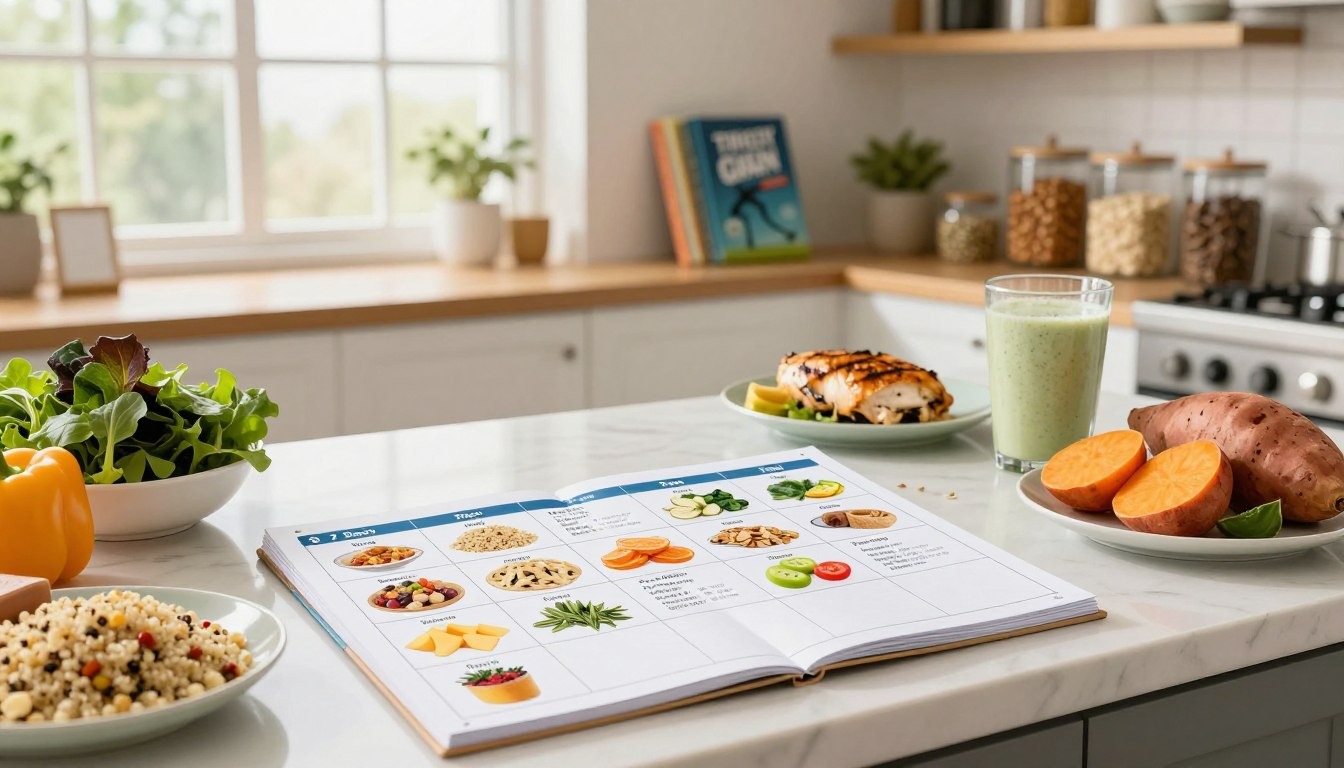
- Protein: The building block for muscle repair. Aim for a palm-sized portion with every meal (chicken, fish, eggs, Greek yogurt, tofu, lentils).
- Vegetables & Fruits: Provide vitamins, minerals, and fiber for recovery and health. Fill half your plate.
- Smart Carbs & Fats: Provide energy. (Oats, rice, potatoes, avocados, nuts, olive oil).
- Hydration: Drink water consistently. Your urine should be light yellow.
- The 80/20 Rule: Eat nourishing foods 80% of the time, allow for flexibility and enjoyment 20% of the time. Extreme restriction backfires.And there you are, standing by the door, trying to remember how your limbs work.Starting Gym
Step 11: Prioritize Recovery – Where Growth Actually Happens
Lifting breaks muscle tissue down. Recovery builds it back stronger.
- Sleep: This is your most potent performance-enhancing drug. Target 7-9 hours per night. Without it, progress stalls and injury risk soars.
- Rest Days: They are part of the program, not a deviation from it. Active recovery (a walk, light stretching) is great.
- Listen to Your Body: Sharp pain is different from muscle soreness (DOMS). Sharp pain = stop. General soreness = move gently, it will pass.And there you are, standing by the door, trying to remember how your limbs work.Starting Gym
Part 5: The Long Game – Cementing the Habit (6 Months+)
You’re no longer a beginner. You’re a trainee.
Step 12: Evolve Your Programming
After 4-6 months of consistent full-body training, you can explore more nuanced splits to increase volume. Examples:
- Upper/Lower Split: 4 days per week (Upper Body Mon/Thu, Lower Body Tue/Fri).
- Push/Pull/Legs (PPL): 6 days per week for greater frequency.
This is when you can start following reputable, structured programs from trusted coaches (like Starting Strength for pure strength, or a bodybuilding-style split for hypertrophy).And there you are, standing by the door, trying to remember how your limbs work.Starting Gym
Step 13: Embrace the Plateau (And Break Through It)
You will stall. Everyone does. It’s not failure; it’s data.
- Deload Week: Every 6-8 weeks, cut your weights or volume in half for a week. This allows for super-compensation—you’ll come back stronger.
- Change a Variable: If you’ve been in the 8-10 rep range for months, try 3 weeks of heavier weight for 4-6 reps, or lighter weight for 12-15 reps.
- Audit Your Recovery: Is your sleep poor? Has stress been high? Is your diet haphazard? Plateaus are often lifestyle signals.And there you are, standing by the door, trying to remember how your limbs work.Starting Gym
Step 14: Become Part of the Community
The gym’s greatest asset isn’t the equipment; it’s the people. Give a nod to the regulars you see. Ask for a spot when you attempt a personal record. You’ll find that the community you once found intimidating is now a source of support and shared purpose.And there you are, standing by the door, trying to remember how your limbs work.Starting Gym
Conclusion: The Lifter You Become
Starting gym training is not a 12-week challenge. It is the beginning of a lifelong practice of self-respect. The weights become a mirror, reflecting your discipline, Starting Gym your resilience, and your commitment to showing up for yourself.And there you are, standing by the door, trying to remember how your limbs work.Starting Gym
The changes will come. First, you’ll notice you sleep better. Then, you’ll carry groceries without thinking. You’ll see a slight new definition in the mirror.Starting Gym You’ll realize you haven’t thought about your phone in an hour. The gym becomes less a place of anxiety and more a sanctuary of your own making—a space where you practice overcoming obstacles, one controlled, deliberate rep at a time.And there you are, standing by the door, trying to remember how your limbs work.Starting Gym
Remember, the strongest person in the gym isn’t necessarily the one lifting the most weight. It’s the one who, despite doubt, fatigue, and busyness, keeps coming back.Starting Gym That discipline, forged in the simple act of repetition, becomes a strength you carry into every corner of your life.And there you are, standing by the door, trying to remember how your limbs work.Starting Gym
So, take that first step. Walk through the door. Pick up the lightest dumbbell. And begin the most important set of your life: the one that never truly ends, the lifelong pursuit of a stronger you.Starting Gym
Focus Keywords: How to Start Gym Training, Beginner Gym Guide, First Time at Gym
SEO & Article Keywords: gym training for beginners, step by step workout plan, how to lift weights, beginner weightlifting, gym intimidation, starting a fitness journey, full body workout routine, gym etiquette, progressive overload, fitness motivation, gym basics, personal training tips, workout consistency, strength training fundamentals, building a gym habit, home vs gym workout, choosing a gym, exercise form tips, nutrition for beginners, recovery for muscle growth.And there you are, standing by the door, trying to remember how your limbs work.Starting Gym