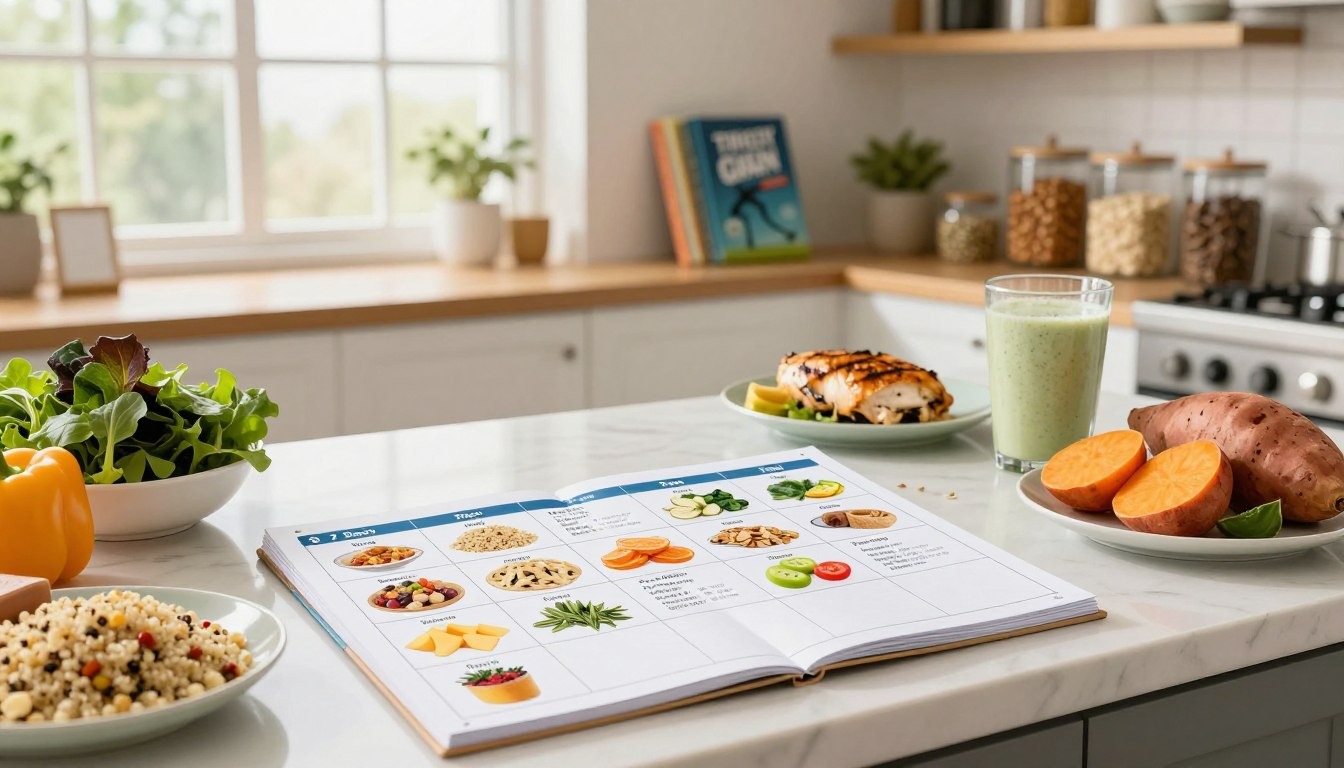
A well-structured gym diet plan is crucial for achieving muscle gain. Nutrition plays a significant role in supporting your workout routine and helping you reach your fitness goals.
Gym Diet Plan for Muscle Gain (7-Day Meal Plan)
A 7-day meal plan can help you stay on track with your nutrition, ensuring you’re consuming the right balance of proteins, carbohydrates, and fats to support muscle growth. This comprehensive plan is designed to provide you with the necessary guidance to optimize your workout nutrition.
Key Takeaways
- A well-planned diet is essential for muscle gain.
- Nutrition supports your workout routine and fitness goals.
- A 7-day meal plan helps you stay on track with your nutrition.
- Balancing proteins, carbohydrates, and fats is crucial for muscle growth.
- Optimizing workout nutrition is key to achieving fitness goals.
The Science Behind Muscle Growth and Nutrition
To achieve significant muscle gain, one must comprehend the biological processes that drive muscle growth and how nutrition supports this process. Muscle growth, or hypertrophy, occurs when muscle fibers are subjected to stress, typically through resistance training, leading to damage and subsequent repair, resulting in increased muscle mass.
How Muscles Grow
Muscle growth is initiated when muscle fibers undergo micro-tears due to resistance training. The body repairs these tears by fusing muscle fibers together, increasing the size and number of muscle fibers. This process is facilitated by satellite cells, which are a type of stem cell that helps to rebuild muscle tissue.Diet Plan
Key factors influencing muscle growth include:
- Intensity of training
- Adequate nutrition
- Sufficient rest and recovery
The Role of Nutrition in Muscle Building
Nutrition plays a critical role in muscle building by providing the necessary building blocks for muscle repair and growth. Adequate intake of protein, carbohydrates, and healthy fats is essential. Protein, in particular, is vital as it provides the amino acids necessary for muscle repair.
A quote from renowned nutrition expert, Dr. John Berardi, highlights the importance of nutrition:
“Nutrition is the foundation upon which the edifice of muscle growth is built. Without the right nutrients, all the training in the world won’t lead to significant gains.”Diet Plan
| Nutrient | Role in Muscle Growth |
| Protein | Provides amino acids for muscle repair and growth |
| Carbohydrates | Supplies energy for workouts and aids in recovery |
| Healthy Fats | Supports hormone production and overall health |
Calculating Your Caloric Needs for Muscle Gain
Understanding your daily caloric needs is crucial for effective muscle gain. To build muscle, you must be in a caloric surplus, meaning you consume more calories than your body burns. This surplus provides your body with the necessary energy to build new muscle tissue.Diet Plan
Determining Your Basal Metabolic Rate (BMR)
Your Basal Metabolic Rate (BMR) is the number of calories your body needs to perform basic life-sustaining functions. To calculate your BMR, you can use the Harris-Benedict equation or an online BMR calculator. For men: BMR = 88.362 + (13.397 x weight in kg) + (4.799 x height in cm) – (5.677 x age in years). For women: BMR = 447.593 + (9.247 x weight in kg) + (3.098 x height in cm) – (4.330 x age in years).Diet Plan
Caloric Surplus: How Much Is Enough?
A caloric surplus is essential for muscle gain. Aim for an additional 250-500 calories above your maintenance level. This surplus should support muscle growth without causing excessive fat gain. As nutrition expert Alan Aragon suggests, “A surplus of 250-500 calories is generally sufficient for most individuals looking to gain muscle without gaining too much body fat.”Diet Plan
Adjustments for Different Body Types
Different body types (ectomorph, mesomorph, endomorph) may require adjustments in caloric intake. Ectomorphs may need a larger surplus due to their fast metabolism, while endomorphs might need to be more cautious to avoid excess fat gain.Diet Plan
When to Increase Calories
As you progress in your muscle gain journey, your caloric needs may change. Regularly assess your progress and adjust your caloric intake accordingly. If you’re not gaining muscle as expected, consider increasing your caloric surplus.Diet Plan
Macronutrient Breakdown for Optimal Muscle Growth
To build muscle effectively, understanding the right balance of macronutrients is crucial. A well-balanced diet that includes the optimal distribution of protein, carbohydrates, and healthy fats is essential for muscle growth and overall health.Diet Plan
Protein Requirements
The importance of protein in muscle building cannot be overstated. Protein is the building block of muscle tissue, and adequate intake is necessary to support muscle growth and repair. The general recommendation is to consume at least 1 gram of protein per pound of body weight daily.Diet Plan
Best Protein Sources for Muscle Building
Good sources of protein include lean meats like chicken and turkey, fish, eggs, dairy products, and plant-based options such as beans and lentils. Variety is key to ensuring you get all essential amino acids.Diet Plan
Carbohydrates: Your Energy Source
Carbohydrates are vital for providing the energy needed for workouts and supporting muscle recovery. Complex carbohydrates such as whole grains, fruits, and vegetables are rich in fiber and nutrients, making them a better choice than simple carbs.
Simple vs. Complex Carbs
Simple carbohydrates, found in foods like white bread and sugary snacks, cause a rapid spike in blood sugar. In contrast, complex carbs provide sustained energy and are more beneficial for overall health and muscle recovery.Diet Plan
Healthy Fats and Their Importance
Healthy fats are crucial for hormone production and overall health. Sources include nuts, seeds, avocados, and olive oil. Including a variety of these foods in your diet supports optimal muscle growth and overall well-being.
As noted by a renowned nutrition expert,
“The balance of macronutrients is not just about muscle gain; it’s about overall health and performance.”
This emphasizes the importance of a balanced diet in achieving fitness goals.
Meal Timing and Frequency for Maximum Gains
Optimizing meal timing and frequency is crucial for maximizing muscle gains. Proper nutrition planning helps ensure that your body is always equipped with the necessary building blocks for muscle growth.Diet Plan
The Anabolic Window: Fact or Fiction?
The concept of the anabolic window suggests that there’s a limited time frame after a workout during which nutrient intake is particularly crucial for muscle recovery and growth. While the exact duration of this window is debated, it’s generally agreed that consuming a mix of protein and carbohydrates post-workout is beneficial.Diet Plan
Optimal Meal Frequency Throughout the Day
Research indicates that meal frequency can impact muscle growth. Eating multiple meals throughout the day can help maintain a positive nitrogen balance, which is essential for muscle building.Diet Plan
| Meal Frequency | Benefits for Muscle Gain |
| 3-5 main meals | Supports overall caloric needs |
| 2-3 snacks | Maintains positive nitrogen balance |
| Post-workout shake | Enhances recovery and growth |
Intermittent Fasting and Muscle Gain
Intermittent fasting involves periods of fasting or calorie restriction followed by periods of unrestricted eating. While it can be effective for weight loss, its impact on muscle gain is more complex and may not be suitable for everyone looking to maximize muscle growth.
Pre and Post-Workout Nutrition Strategies
Proper pre and post-workout nutrition can significantly enhance your muscle-building efforts. Fueling your body correctly around workouts is essential for optimizing performance and recovery.Diet Plan
What to Eat Before Training
Consuming the right nutrients before a workout can improve your performance and reduce muscle damage. A mix of carbohydrates and protein is recommended. Complex carbohydrates provide sustained energy, while protein helps to maintain muscle integrity.Diet Plan
Quick Pre-Workout Meal Ideas
Some effective pre-workout meal ideas include a banana with peanut butter, a protein smoothie with berries, or whole grain toast with avocado and eggs. These meals are easy to digest and provide a good balance of carbohydrates and protein.
Post-Workout Recovery Nutrition
After a workout, your body needs nutrients to recover and rebuild muscle tissue. Consuming a mix of carbohydrates and protein within a certain window can help to maximize recovery. As noted by a study, “Consuming carbohydrates and protein after exercise can help to replenish energy stores and support muscle repair.”
“The combination of carbohydrates and protein after exercise helps to promote muscle protein synthesis and aid in recovery.”Diet Plan
The 30-Minute Recovery Window
The period immediately after a workout is often referred to as the “recovery window.” Consuming your post-workout meal within 30 minutes can help to optimize recovery. A meal with a ratio of 2:1 or 3:1 carbohydrates to protein is typically recommended.
Gym Diet Plan for Muscle Gain: 7-Day Meal Plan
A well-structured 7-day meal plan is crucial for individuals aiming to gain muscle mass effectively. This comprehensive plan will outline daily nutritional strategies to support muscle growth, focusing on different aspects such as high protein intake, complex carbohydrates, and balanced macronutrients.Diet Plan
Day 1: High-Protein Focus
On Day 1, the emphasis is on consuming high amounts of protein to support muscle repair and growth. Protein-rich foods such as chicken, fish, eggs, and dairy products will be central to your meals.Diet Plan
Breakfast, Lunch, Dinner, and Snacks
- Breakfast: Greek yogurt with berries and scrambled eggs
- Lunch: Grilled chicken breast with quinoa and steamed vegetables
- Dinner: Baked salmon with sweet potato and green beans
- Snacks: Cottage cheese with almonds and apple slices
Day 2: Complex Carbohydrate Emphasis
Day 2 focuses on complex carbohydrates, which provide sustained energy for workouts and daily activities. Whole grains like brown rice, oats, and whole wheat bread will be key components.Diet Plan
Breakfast, Lunch, Dinner, and Snacks
- Breakfast: Oatmeal with banana and almond butter
- Lunch: Whole wheat pasta with marinara sauce and grilled chicken
- Dinner: Brown rice with roasted chicken and steamed broccoli
- Snacks: Apple slices with peanut butter and a handful of trail mix
Day 3: Balanced Macronutrient Day
On Day 3, the goal is to achieve a balance of protein, carbohydrates, and fats to support overall nutritional needs. This balance is crucial for maintaining optimal muscle function and recovery.Diet Plan
Breakfast, Lunch, Dinner, and Snacks
- Breakfast: Smoothie bowl with protein powder, banana, spinach, and almond milk topped with granola
- Lunch: Grilled turkey sandwich on whole wheat bread with avocado and mixed greens
- Dinner: Grilled chicken breast with roasted vegetables and quinoa
- Snacks: Hard-boiled eggs and a small serving of mixed nuts
Day 4: Recovery Nutrition Day
Day 4 emphasizes recovery nutrition, focusing on foods that help repair and rebuild muscle tissue after intense workouts. Anti-inflammatory foods like berries and fatty fish will be highlighted.Diet Plan
Breakfast, Lunch, Dinner, and Snacks
- Breakfast: Berry smoothie with protein powder and almond milk
- Lunch: Grilled chicken salad with mixed greens, cherry tomatoes, and a citrus vinaigrette
- Dinner: Baked cod with roasted asparagus and brown rice
- Snacks: Greek yogurt with honey and almonds
Day 5: High-Energy Training Day
On Day 5, the focus is on consuming enough calories and nutrients to support high-energy training. Complex carbohydrates and lean proteins will be essential.Diet Plan
Breakfast, Lunch, Dinner, and Snacks
- Breakfast: Whole grain toast with avocado and scrambled eggs
- Lunch: Grilled chicken wrap with whole wheat tortilla, hummus, and mixed vegetables
- Dinner: Grilled steak with roasted potatoes and steamed green beans
- Snacks: Energy bars and a banana
Day 6: Lean Protein Focus
Day 6 continues the emphasis on protein with a focus on lean protein sources to support muscle growth without excess fat. Lean meats and low-fat dairy products will be central.
Breakfast, Lunch, Dinner, and Snacks
- Breakfast: Protein shake with low-fat milk and a scoop of protein powder
- Lunch: Turkey and avocado wrap with mixed greens
- Dinner: Grilled chicken breast with quinoa and steamed carrots
- Snacks: Cottage cheese with cucumber slices
Day 7: Strategic Refeed Day
On Day 7, a strategic refeed day is implemented to replenish glycogen stores and support muscle recovery. This involves a slight increase in carbohydrate intake.
Breakfast, Lunch, Dinner, and Snacks
- Breakfast: Pancakes made with whole wheat flour and topped with fresh berries and maple syrup
- Lunch: Grilled chicken breast with pasta and marinara sauce
- Dinner: Baked chicken thighs with roasted vegetables and quinoa
- Snacks: Rice cakes with almond butter and banana slices
7-day meal plan for muscle gain
Muscle-Building Supplements: What Works?
When it comes to building muscle, supplements can play a crucial role in supporting your training regimen. A well-balanced diet is essential, but supplements can help fill nutritional gaps and enhance performance.
Essential Supplements for Muscle Growth
Certain supplements have been proven to be effective in promoting muscle growth. These include:
Protein Powders and BCAAs
Protein powders are a convenient way to increase your protein intake, essential for muscle repair and growth. Branched-Chain Amino Acids (BCAAs) can help reduce muscle soreness and support recovery.
Creatine and Beta-Alanine
Creatine is well-documented to improve strength and endurance during high-intensity activities. Beta-Alanine can delay muscle fatigue, allowing for more intense workouts.
Supplements to Consider Based on Your Goals
The choice of supplement can depend on your specific muscle-building goals. Whether you’re looking to bulk up or lean out, different supplements can support your objectives.
Mass Gainers vs. Lean Muscle Builders
Mass gainers are ideal for those looking to bulk up, providing a high caloric intake. In contrast, lean muscle builders are designed for those who want to gain muscle without excess fat.
It’s essential to choose supplements that align with your fitness goals and dietary needs.
Hydration and Muscle Growth: The Overlooked Connection
When it comes to building muscle, many focus on diet and exercise, but hydration plays a critical role too. Adequate hydration is essential for muscle growth and overall athletic performance. It aids in transporting nutrients to muscles and removing waste products, which is vital during intense workout sessions.
Water Intake Guidelines for Weightlifters
Weightlifters should aim to drink at least 8-10 glasses of water per day, adjusting according to individual needs and environmental conditions. It’s also crucial to drink water before, during, and after workouts to stay hydrated. Here are some tips:
- Drink 16-20 ounces of water 1-2 hours before exercise.
- Consume 7-10 ounces of water every 10-20 minutes during exercise.
- Replenish fluids after exercise based on weight loss during the workout.
Electrolytes and Their Role in Performance
Electrolytes, such as sodium, potassium, and calcium, are vital for maintaining proper hydration and nerve function. They help regulate muscle contractions and heart function. During intense workouts, especially in hot conditions, electrolyte balance can be disrupted, leading to cramps or fatigue. Including electrolyte-rich foods or supplements in your diet can help maintain optimal levels.
Grocery Shopping List for Your Muscle-Building Diet
Stocking your pantry with the right foods is crucial for a successful muscle-building diet. Having the right ingredients on hand ensures that you’re always prepared to fuel your body for optimal muscle growth.
grocery shopping list for muscle gain
To help you get started, here’s a breakdown of the essential food groups you should include in your grocery shopping list.
Protein Sources
Include a variety of protein-rich foods like chicken breast, lean beef, fish, eggs, and plant-based options such as beans and lentils.
Carbohydrate Sources
Focus on complex carbohydrates like brown rice, whole wheat bread, and a variety of vegetables to provide sustained energy.
Healthy Fat Sources
Don’t forget healthy fats from sources like nuts, seeds, avocados, and olive oil, which are crucial for hormone production and overall health.
Fruits, Vegetables, and Micronutrients
Ensure you’re getting a wide range of fruits and vegetables to cover your micronutrient needs, supporting overall health and muscle recovery.
Meal Prep Strategies for Busy Lifters
Busy schedules shouldn’t compromise your fitness goals; effective meal prep can make all the difference. By dedicating a few hours each week to meal preparation, you can ensure that you’re consistently fueling your body with the right nutrients to support muscle growth and recovery.
Batch Cooking Techniques
Batch cooking is a time-efficient method that involves preparing large quantities of a particular dish or ingredient. This technique is ideal for busy lifters as it allows for the creation of multiple meals that can be reheated throughout the week.
- Cook proteins like chicken, beef, or tofu in bulk.
- Prepare complex carbohydrates such as brown rice, quinoa, or sweet potatoes.
- Roast a variety of vegetables to add to your meals.
Equipment That Makes Meal Prep Easier
Having the right equipment can significantly streamline your meal prep process. Consider investing in a slow cooker, instant pot, or a set of microwave-safe containers to make cooking and reheating more efficient.
Storage and Reheating Tips
Proper storage and reheating techniques are crucial to maintaining the nutritional value and safety of your prepped meals.
| Storage Method | Reheating Tip | Nutritional Benefit |
| Airtight Containers | Microwave on low heat | Preserves vitamins and minerals |
| Refrigeration | Oven reheating at 275°F | Maintains texture and flavor |
| Freezing | Stovetop reheating with a splash of water | Retains protein quality |
Maintaining Nutritional Value When Reheating
To minimize nutrient loss when reheating, use gentle heat and avoid overcooking. Adding a splash of water or using a steamer can help retain the meal’s moisture and nutritional content.
Adjusting Your Diet Plan Based on Progress
Your diet plan should be dynamic, changing as your body composition and progress dictate. Regular assessments are necessary to ensure you’re on track to meet your muscle gain objectives.
Tracking Body Composition Changes
Monitoring your body composition is crucial for understanding the effectiveness of your diet plan. Use a combination of weight measurements, body fat percentage, and progress photos to track changes. This data will help you identify areas for adjustment.
When and How to Modify Your Caloric Intake
Adjusting your caloric intake is essential for continued progress. If you’re not gaining weight or muscle mass as expected, you may need to increase your caloric intake. Conversely, if you’re gaining too much fat, you may need to reduce your caloric intake.
Breaking Through Plateaus
Plateaus are a normal part of the muscle gain journey. To break through a plateau, reassess your diet plan and make adjustments as needed. This may involve changing your macronutrient ratios, adjusting your meal frequency, or modifying your caloric intake.
Conclusion
A well-structured diet plan is crucial for achieving muscle gain. By understanding the science behind muscle growth, calculating your caloric needs, and implementing a balanced macronutrient breakdown, you can optimize your nutrition for maximum gains.
Consistency is key when it comes to a muscle gain diet plan. Stay committed to your nutritional regimen, and don’t hesitate to adjust your plan as needed based on your progress.
By combining a solid diet plan with a consistent training regimen, you’ll be on your way to achieving your muscle gain goals. Focus on making sustainable lifestyle changes rather than seeking quick fixes, and you’ll see lasting results.
With the right mindset and a well-planned diet, you can successfully achieve your muscle gain objectives and maintain a healthy, balanced physique.
FAQ
What is the ideal caloric surplus for muscle gain?
A caloric surplus of 250-500 calories above your maintenance level is generally recommended for muscle gain, as it provides the necessary energy for muscle growth without excessive fat gain.
How much protein do I need for muscle building?
For muscle building, the International Society of Sports Nutrition recommends consuming 1.6-2.2 grams of protein per kilogram of body weight daily, spread across 3-5 main meals and 2-3 snacks.
What is the anabolic window, and is it still a relevant concept?
The anabolic window refers to the period after a workout when your body is most receptive to nutrient uptake and muscle growth. While its significance has been debated, consuming a mix of protein and carbohydrates within 30-60 minutes post-workout can still be beneficial for recovery and muscle growth.
Can I build muscle on a vegetarian or vegan diet?
Yes, it is possible to build muscle on a vegetarian or vegan diet by consuming a variety of plant-based protein sources, such as legumes, beans, tofu, tempeh, and seitan, and ensuring adequate caloric intake.
How often should I adjust my diet plan?
It’s recommended to reassess and adjust your diet plan every 4-6 weeks based on your progress, or when you’ve reached a plateau, to ensure you’re on track to meet your muscle gain goals.
Are supplements necessary for muscle gain?
While supplements can be helpful, they are not necessary for muscle gain. A well-planned diet that meets your nutritional needs is the foundation for muscle growth. Supplements like protein powder, creatine, and BCAAs can be useful additions, but should not replace whole foods.
How important is hydration for muscle growth?
Hydration is crucial for muscle growth and overall performance. Adequate water intake helps regulate body temperature, transport nutrients, and remove waste products. Aim to drink at least 8-10 glasses of water per day, and adjust according to your individual needs.
Can meal prep help with muscle gain?
Yes, meal prep can be a valuable tool for muscle gain by ensuring consistent and timely nutrient intake. It helps in maintaining a caloric surplus, meeting protein requirements, and optimizing meal frequency, all of which support muscle growth.